

Part 01 of 04 · Walls
A city inside rings
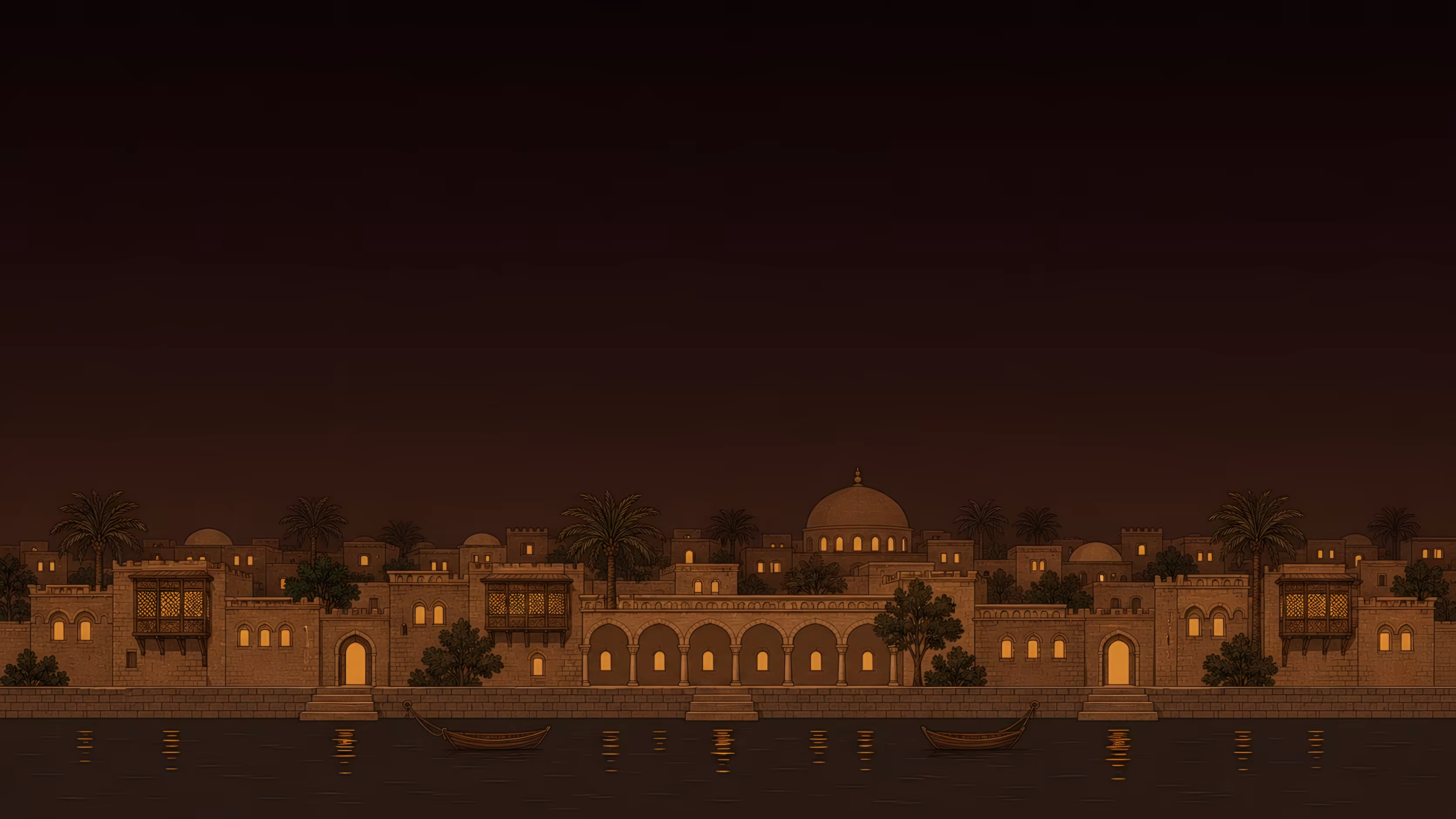
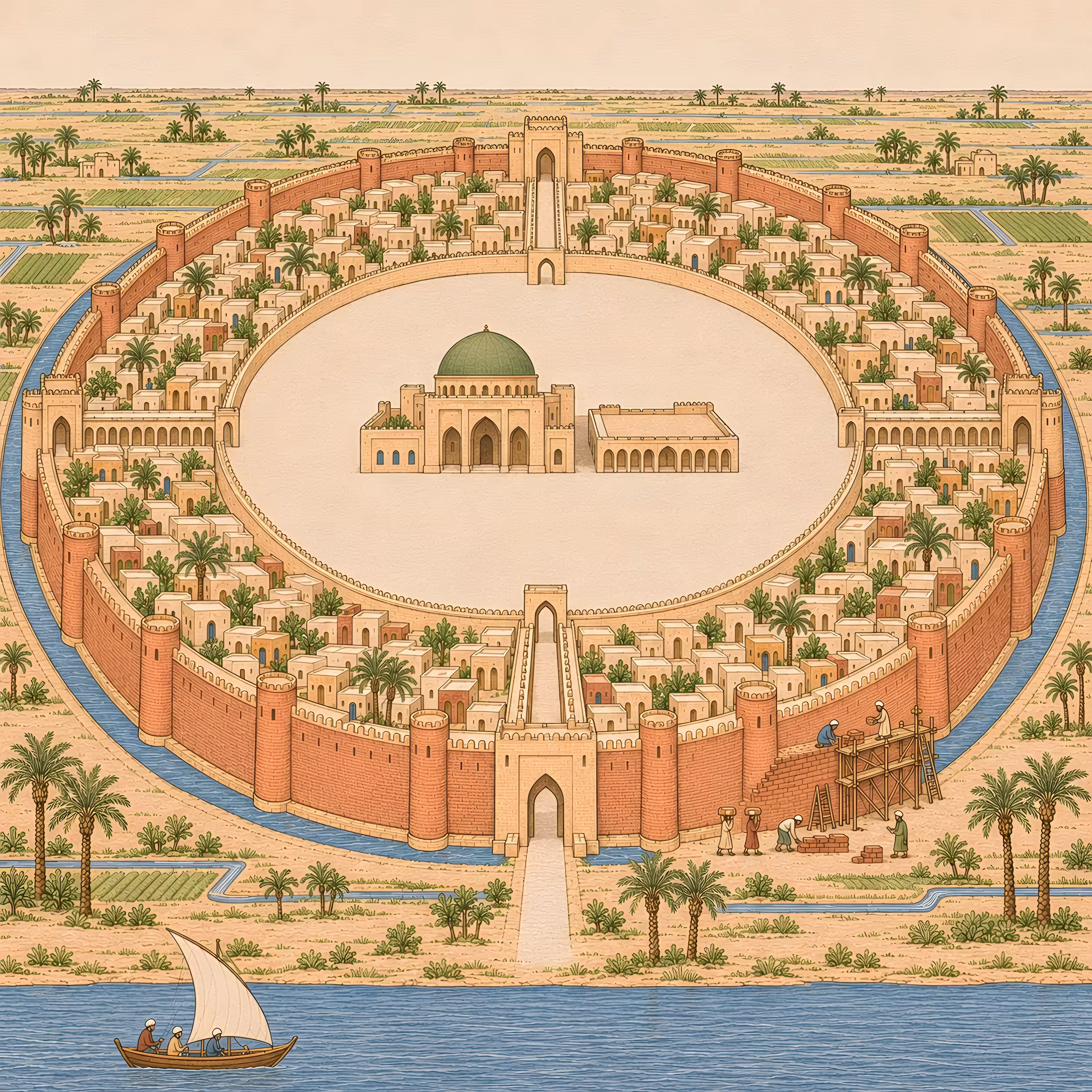
Written accounts describe a moat and more than one wall around the circle, the main wall the thickest of all. Together they drew a hard line between the caliph’s city and the world outside.
Next · Gates
Heart of
the Golden Age
For five centuries, Baghdad was one of the great cities of learning. Follow it from a circle drawn beside the Tigris to the hospitals, libraries and scholars that made its name.
The journey
Follow it from a circle drawn beside the Tigris to the hospitals, libraries and scholars that made its name.
The story
I · 762–833
A capital rises on the Tigris and begins gathering knowledge
II · 833–945
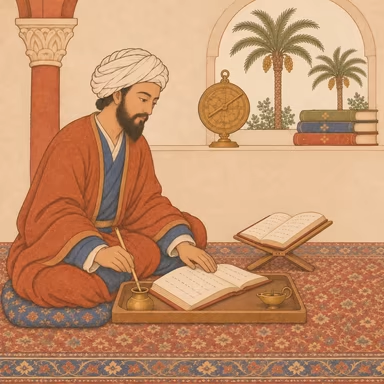
Scholars translate, test, and invent as power shifts.
III · 945–1258
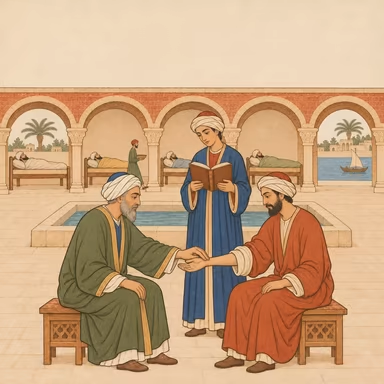
Learning becomes institutions, and books travel far beyond the city.
Hover an image to enter its ageScroll to enter its age
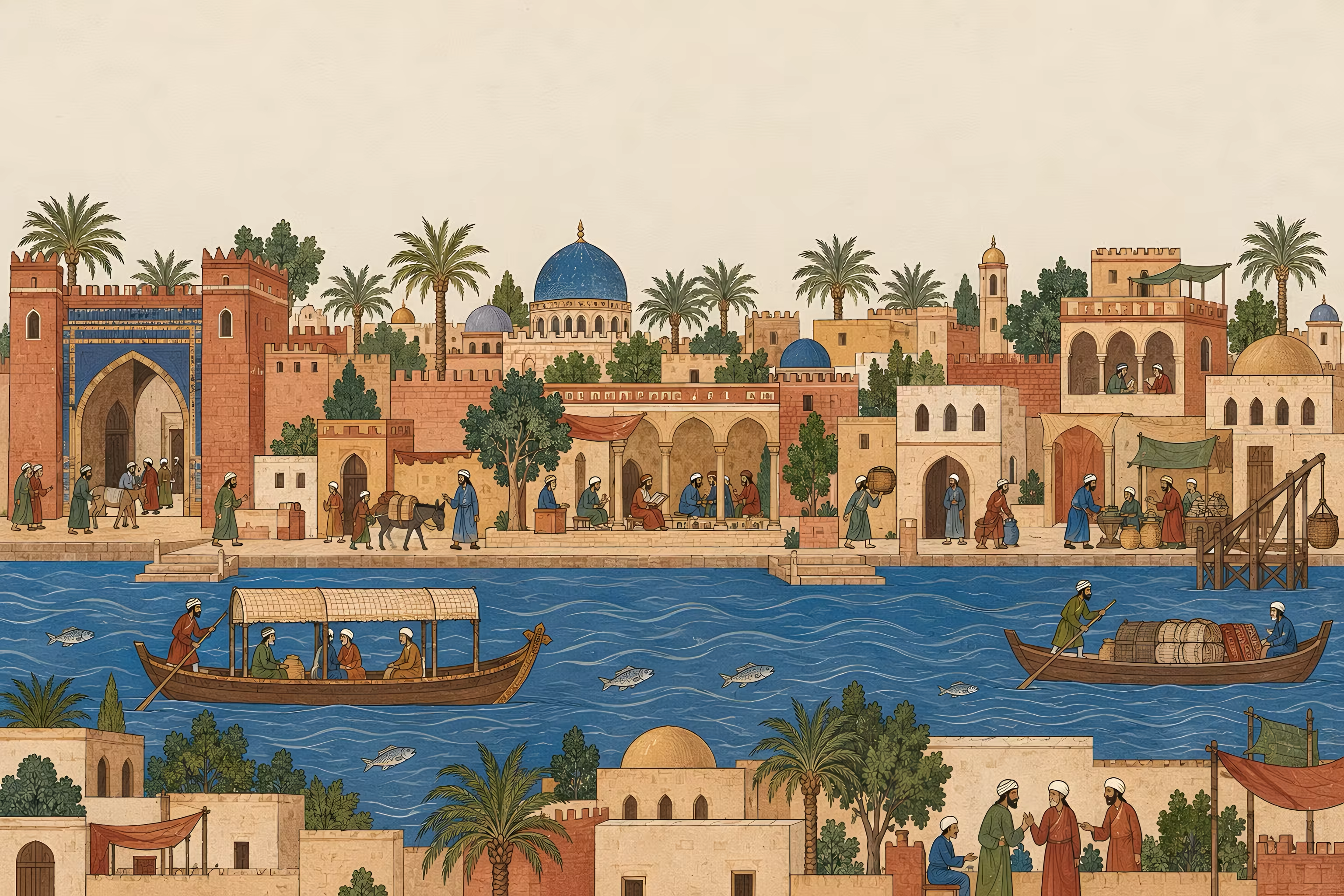
In seventy years, a new capital rose on the Tigris, drew people from across an empire, and began gathering knowledge from many languages.
01 · 750
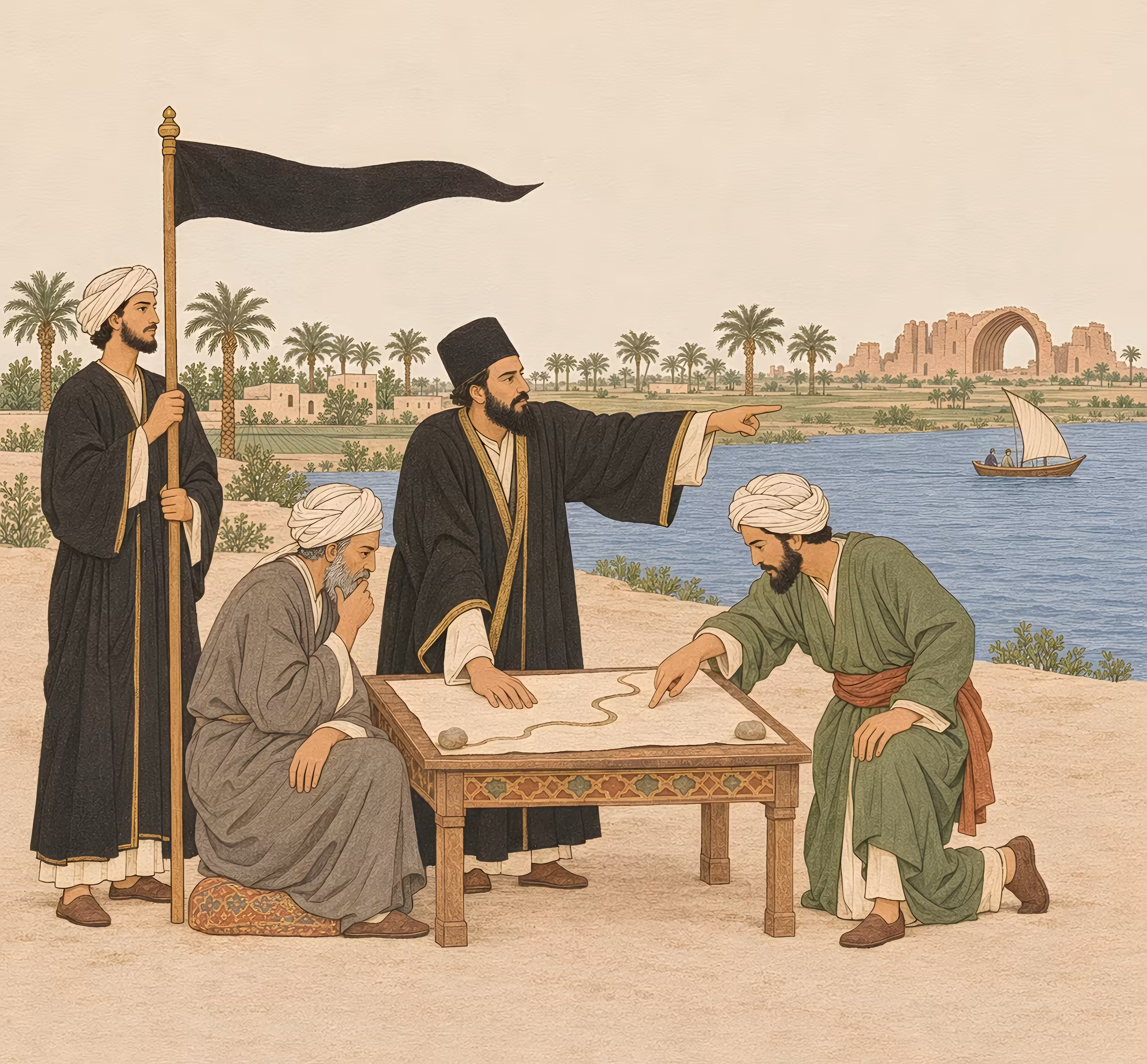
In 750, the Abbasids overthrew the Umayyad dynasty and took control of a vast caliphate. Power was shifting east, and the new rulers wanted a capital that reflected it. They looked to Iraq, a land of old cities, near the former Sasanian capital of Ctesiphon. The question was where, exactly, to build.
02 · 762
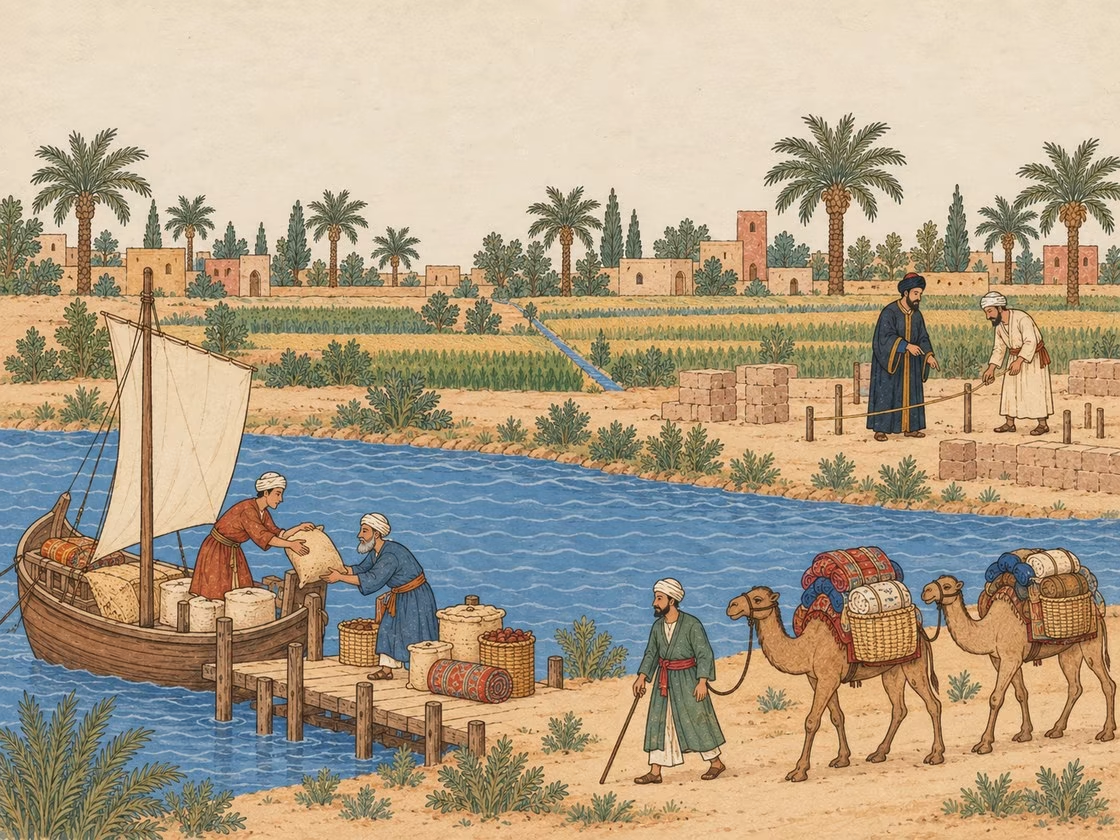
The answer lay on the Tigris. The river and the roads around it linked the site to farmland and to trade networks reaching far beyond Iraq: a steady flow of people, supplies, and ideas. In 762, the caliph al-Mansur began to build. Geography offered the opportunity; imperial ambition would turn it into a city.
762
CE · 145 AH
The year al-Mansur founded Baghdad—the starting point of its Golden Age, in a region settled long before.
CE = Common Era · AH = Hijri year (Anno Hegirae)
Part 01 of 04 · Walls
Written accounts describe a moat and more than one wall around the circle, the main wall the thickest of all. Together they drew a hard line between the caliph’s city and the world outside.
Next · Gates
Part 02 of 04 · Gates
Four gates, four roads out: to Kufa, Basra, Khurasan and Syria. From each, an arcaded avenue ran through the ring of houses to the open centre.
Next · Mosque
Part 03 of 04 · Mosque
The congregational mosque stood beside the palace at the centre, where the community gathered for Friday prayer.
Next · Palace
Part 04 of 04 · Palace
At the very centre stood the caliph’s palace under a great dome. Every ring and every road of the plan led here: a city drawn around its ruler.
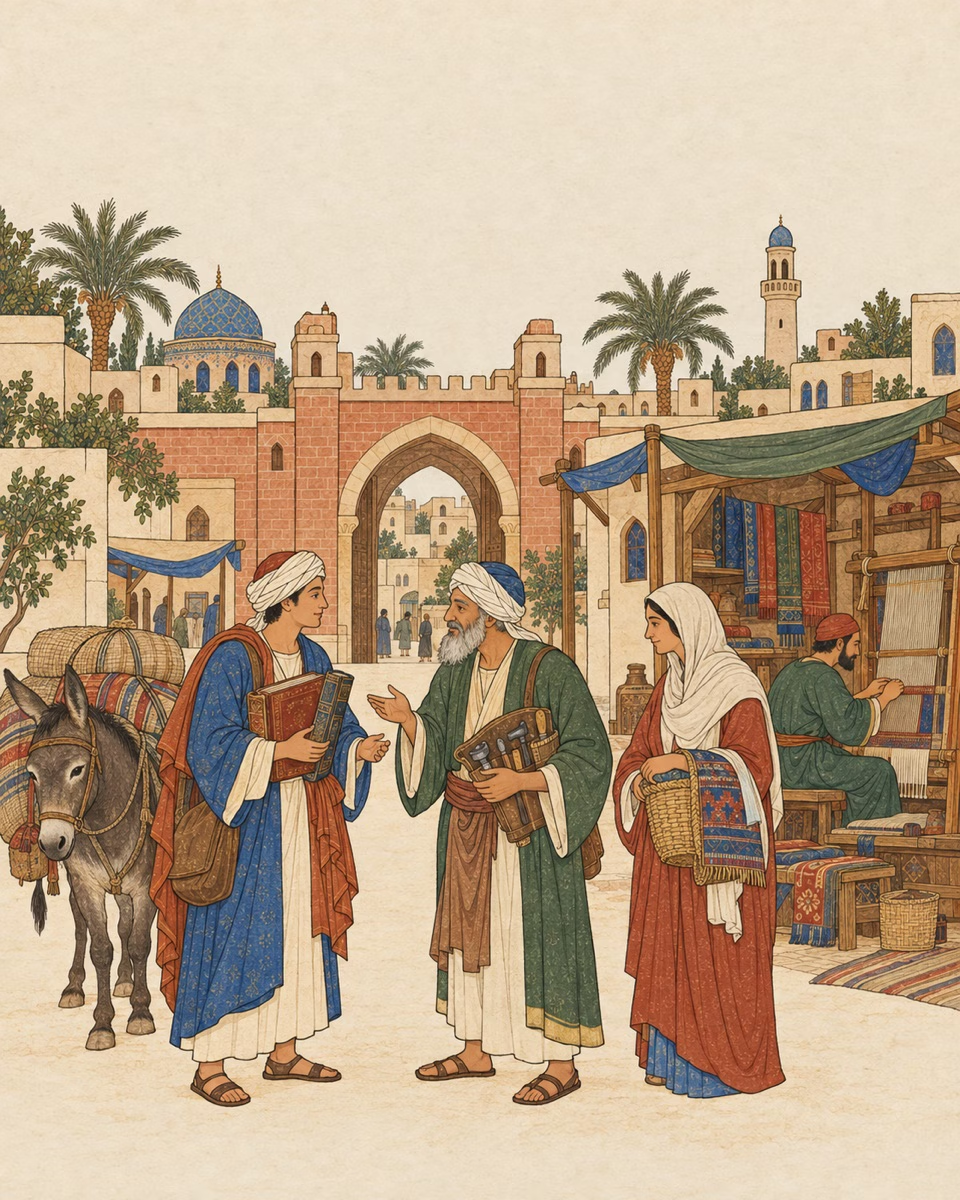
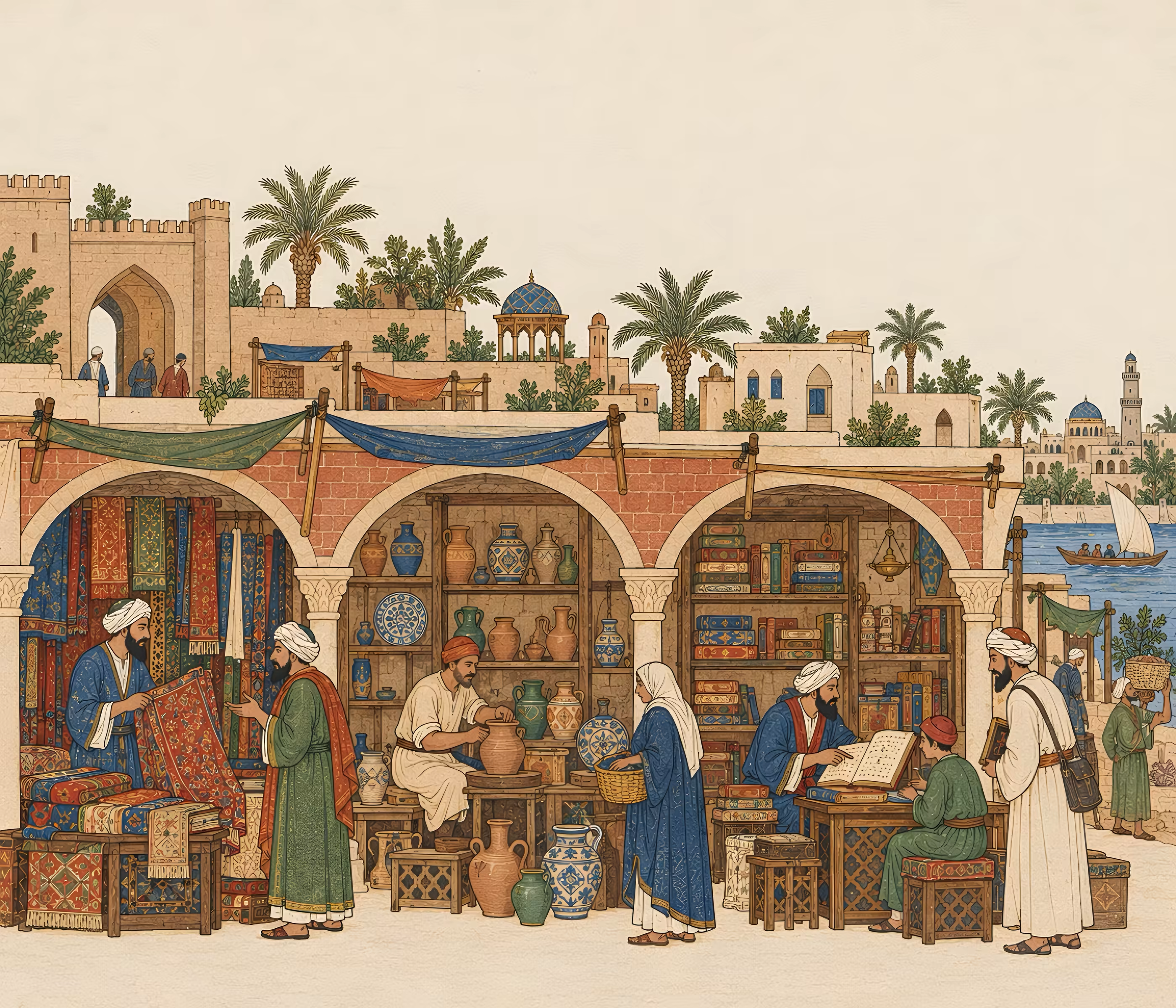
The circle could not hold for long. Markets, workshops, and neighbourhoods spread beyond the original enclosure as people arrived from across the empire, drawn by work at court and by trade. Baghdad became an Arabic-speaking metropolis with a strong Persian presence, and with the people came their skills and their knowledge. Skills and ideas needed patrons, and Baghdad had them.
Under Harun al-Rashid, who ruled from 786 to 809, the court commanded immense wealth; under al-Ma’mun, from 813 to 833, translation and scholarship won prominent support. A court needed physicians and experts in calculation, and a patron surrounded by scholars gained prestige. Officials and wealthy families followed, and many of them paid for one demanding task: translation.
Patronage paid for the work. What made it last were three things: careful translation, places to keep the books, and scholars who turned what they read into new methods.
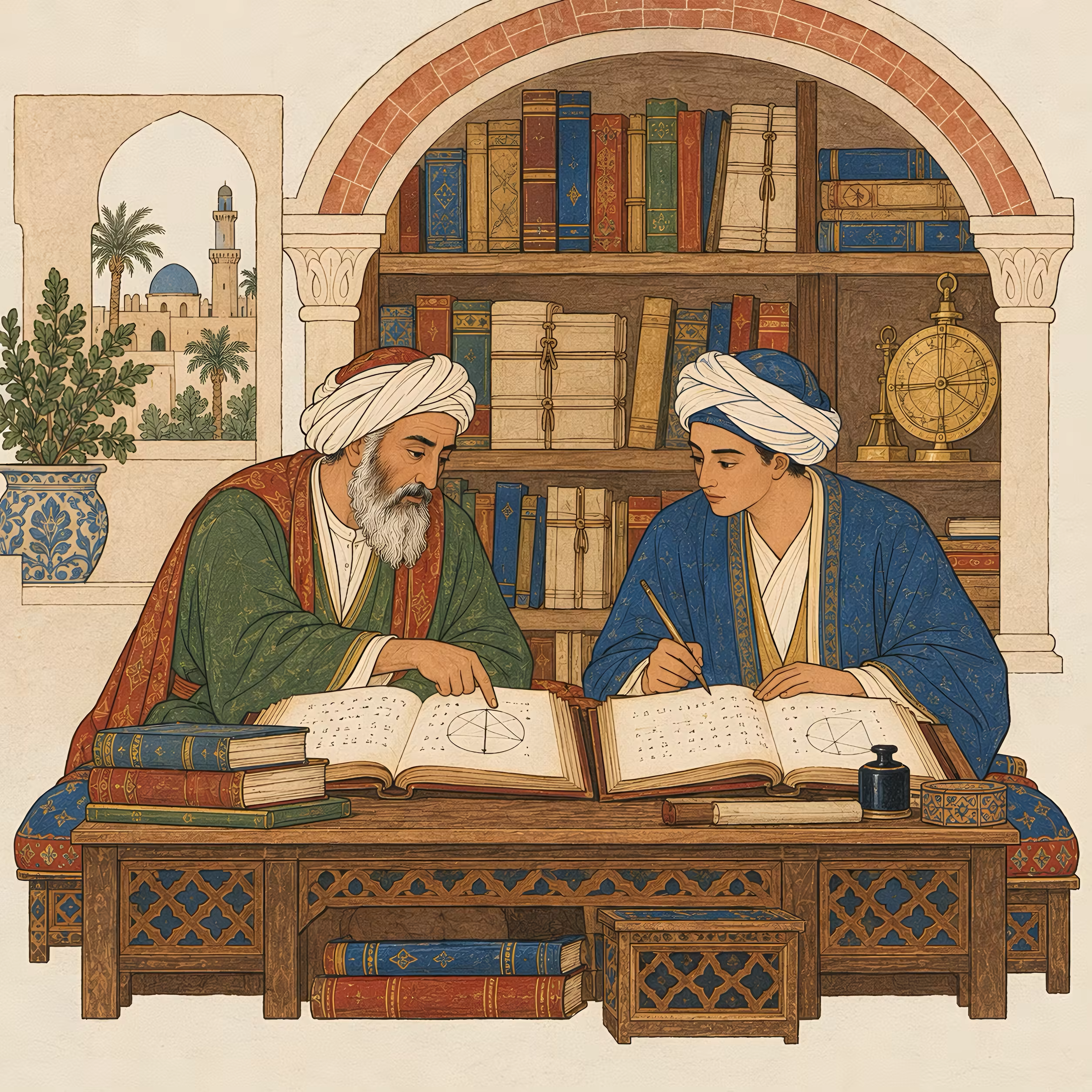
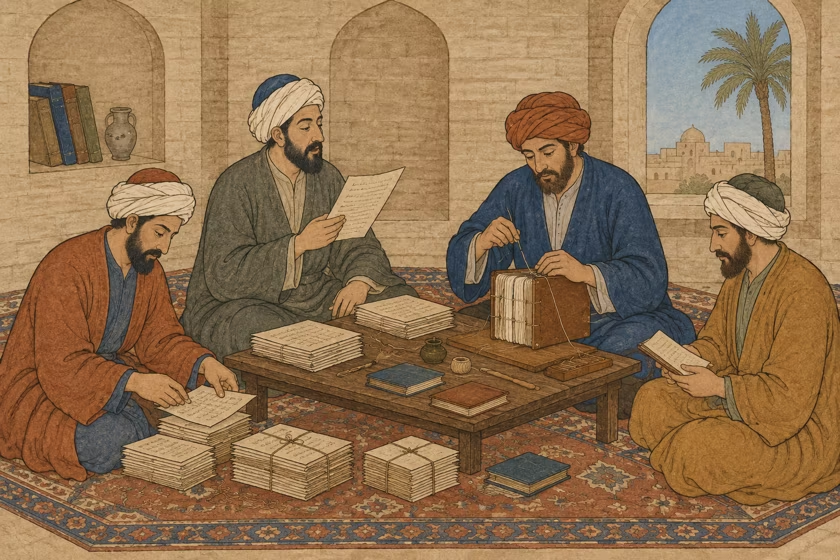
Greek, Syriac, Persian and Sanskrit learning began pouring into Arabic. A translator had to know the subject as well as the languages: one damaged manuscript, one unknown term or two copies that disagreed could stop the work cold. Translation had become detective work.
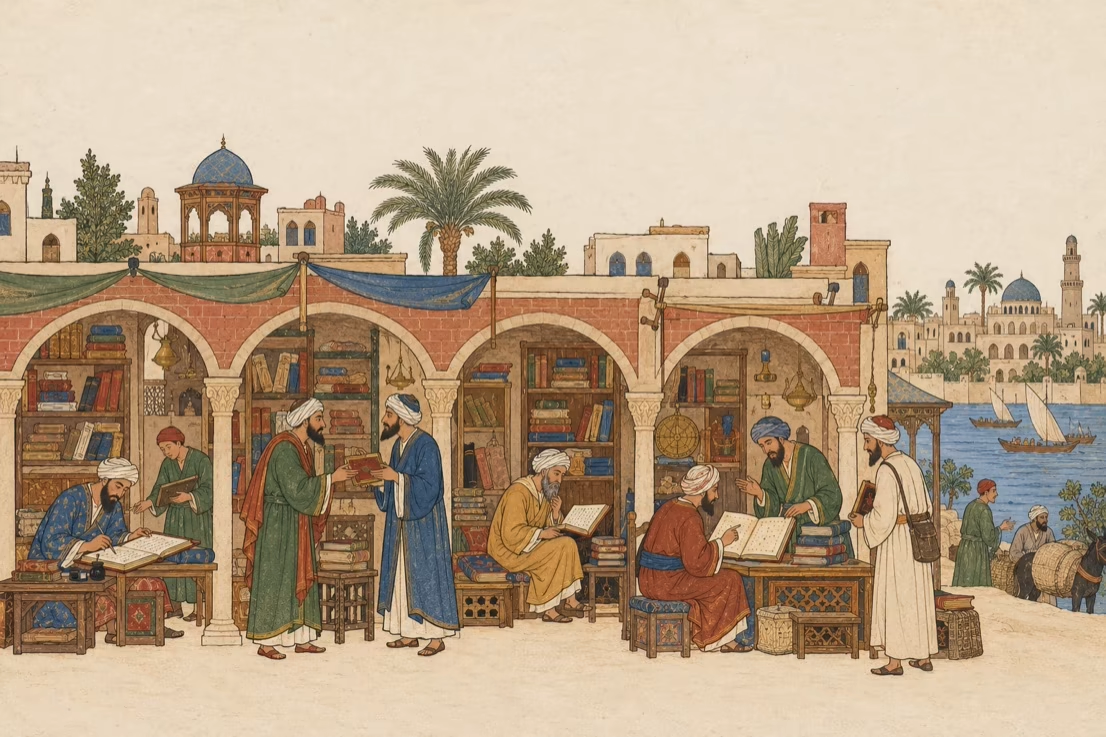
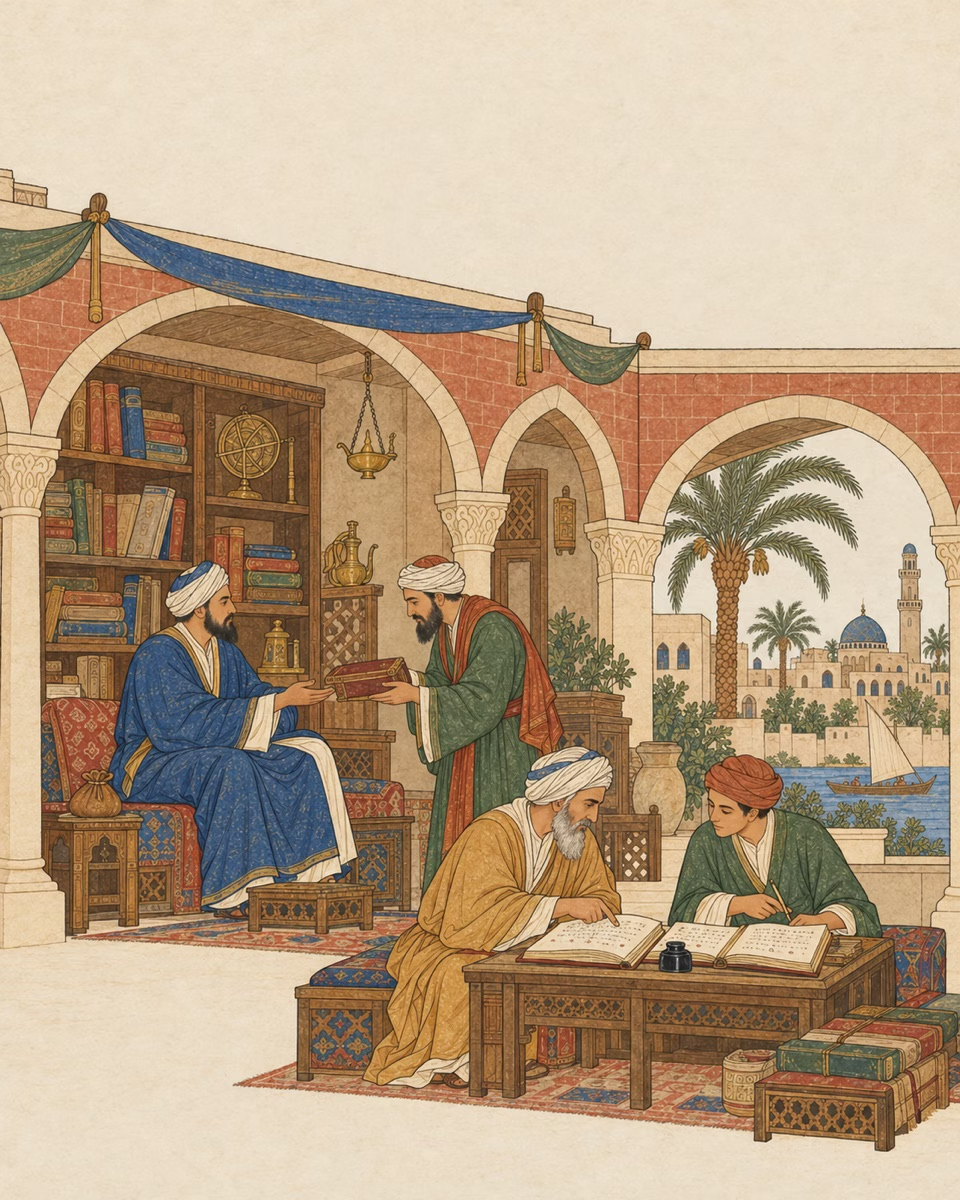
Books gathered in palaces, private houses, and institutions, among them the caliphal collection known as Bayt al-Hikma, the House of Wisdom. Historians still debate how it was organised; it was not a modern university. But it became a symbol of a growing culture of collectors, copyists, and readers.
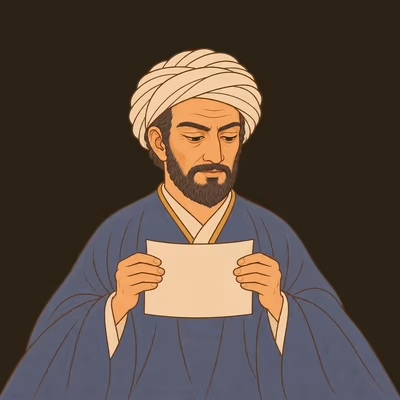
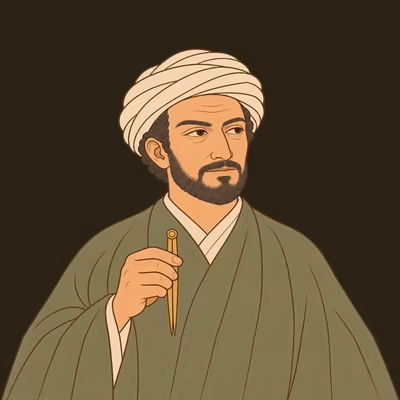
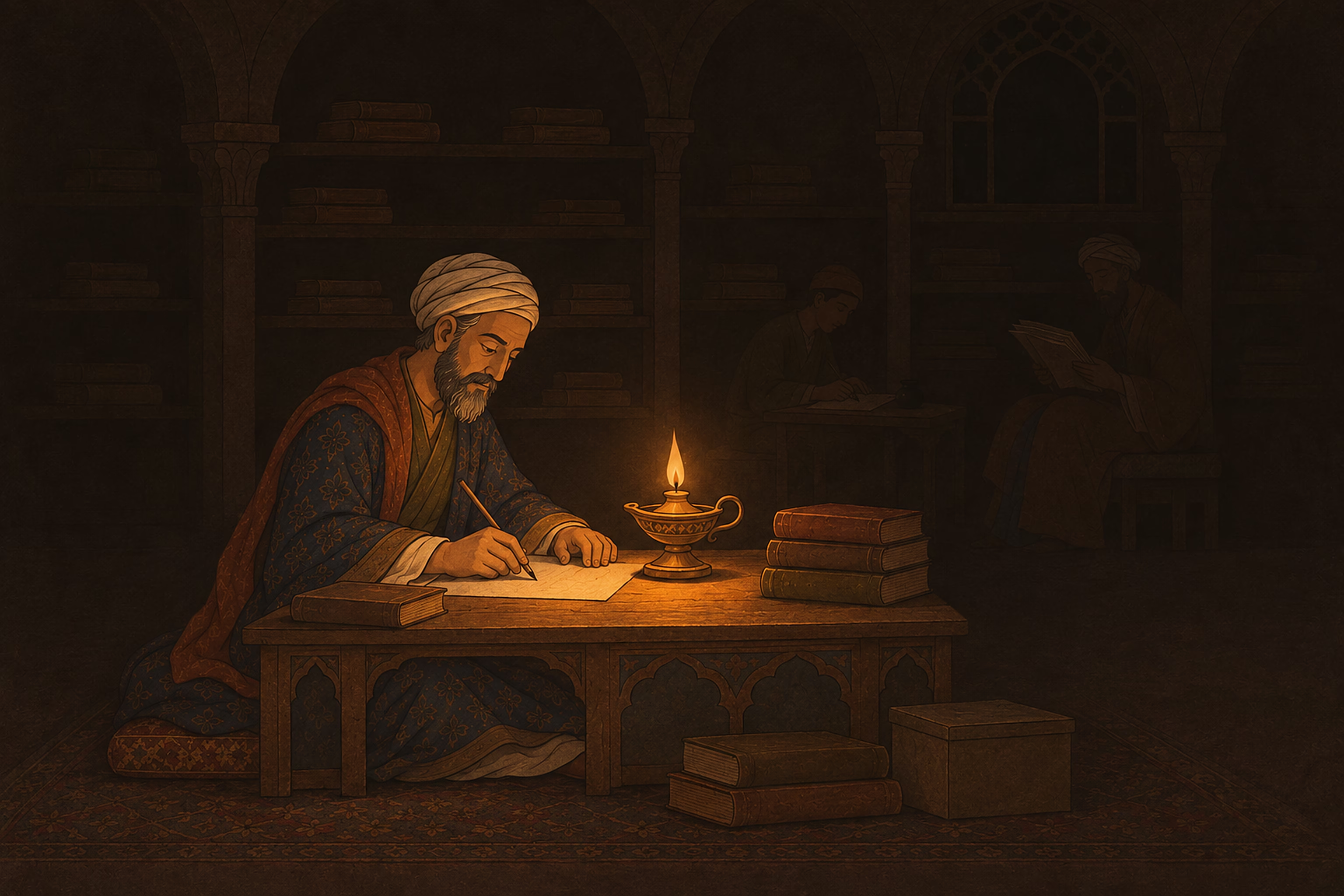
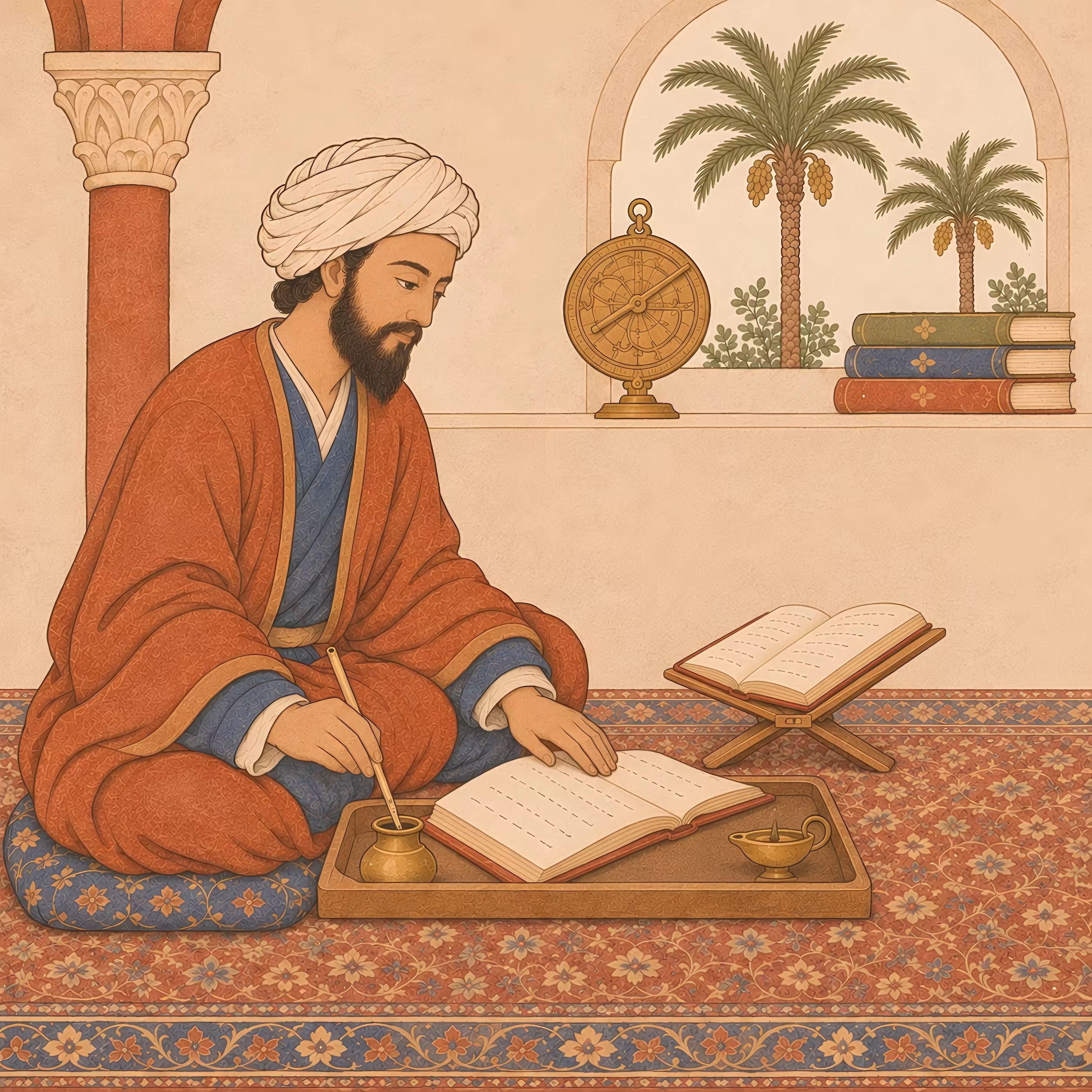
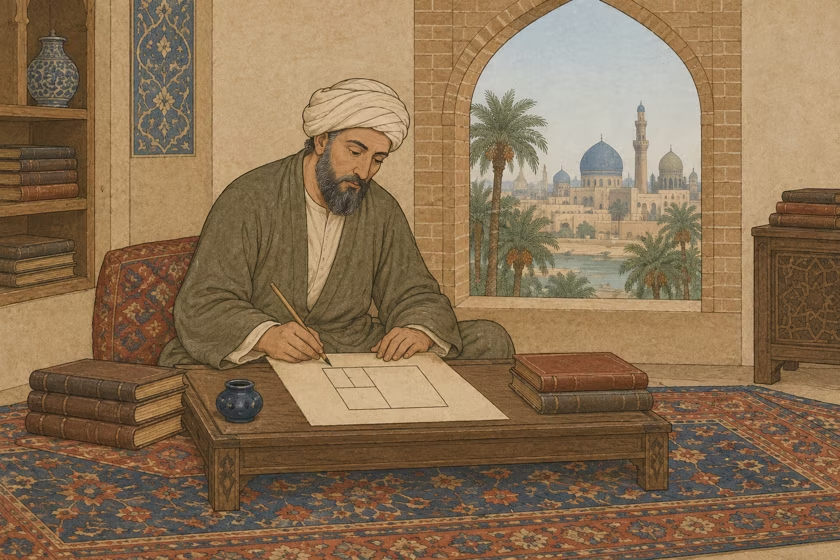
In this world worked al-Khwarizmi. Writing in the early ninth century on algebra, arithmetic, astronomy, and geography, he set out systematic methods for solving equations in his Book of Algebra. “Algebra” comes from its key term, al-jabr; “algorithm” from a Latin form of his name. Two everyday words still carry his legacy.
For more than a century, Baghdad’s scholars translated, tested, and invented even as the court moved away and power shifted.

End of Period I · 762–833
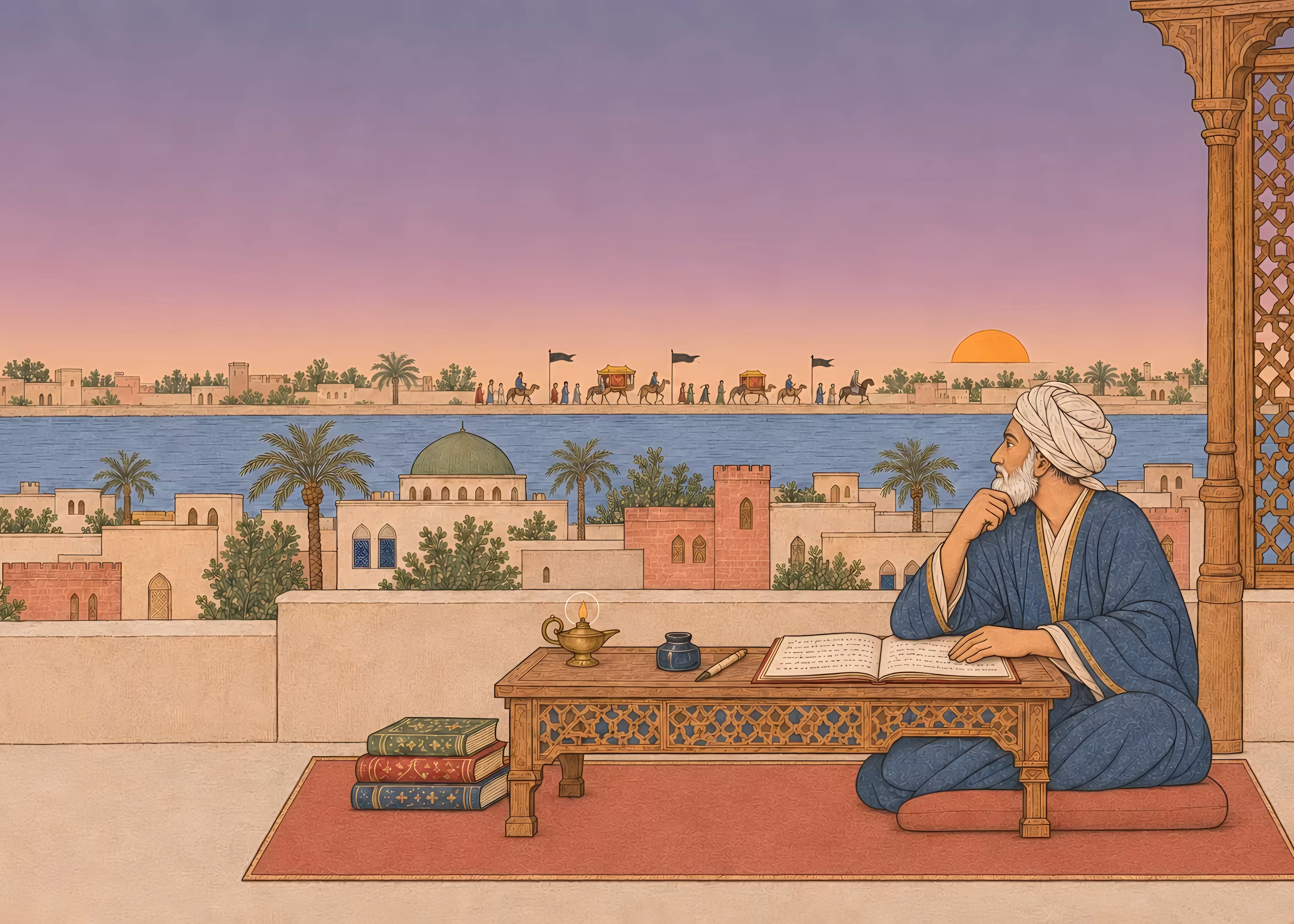
In 833 al-Ma’mun died on campaign. Within three years the court had moved north to Samarra, leaving Baghdad almost without caliphs for more than half a century. But much of what made the city stayed: its translators, its books, its new methods. In the century ahead they would be tested, argued over and built upon.
Part I · 833–945
Between 833 and 945 the caliph’s court left Baghdad and came back. The city’s learning carried on through all of it.
The court in Samarra · 56 years
218 AH٢١٨ هـ
833
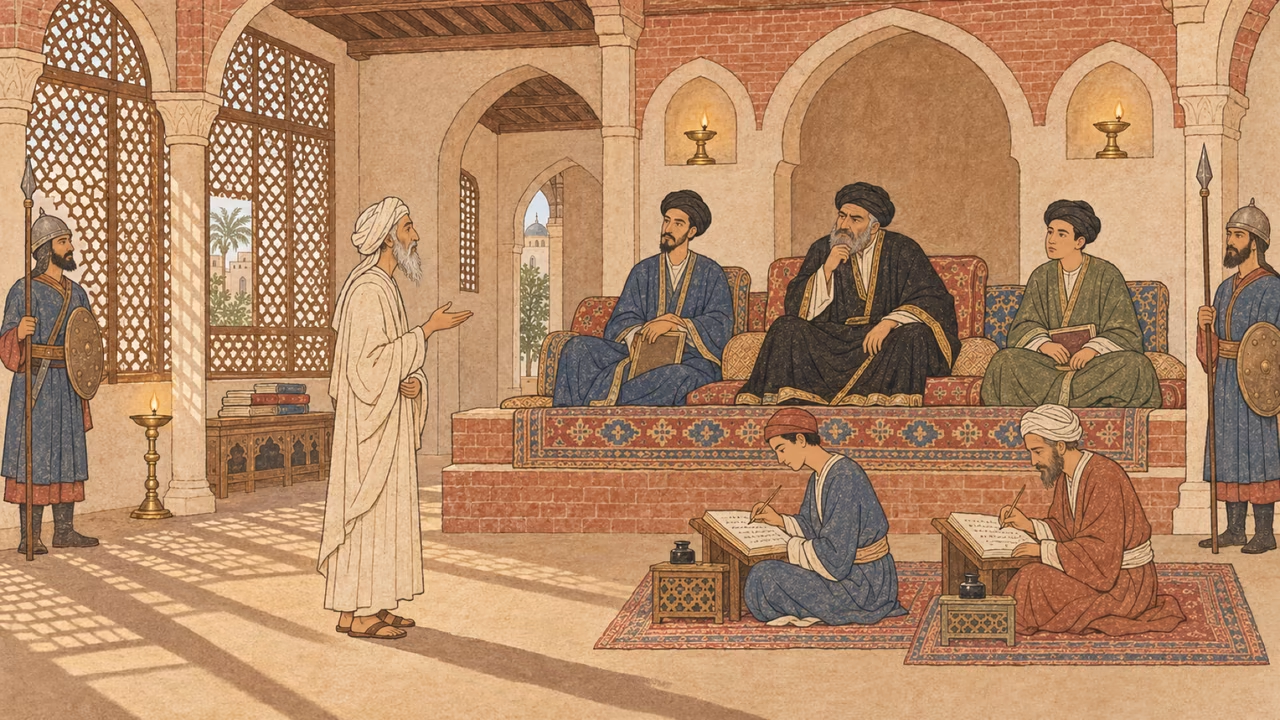
Al-Ma’mun used the state to make scholars accept one theological position. The power that paid for books could also demand agreement.
Caliph · al-Ma’mun
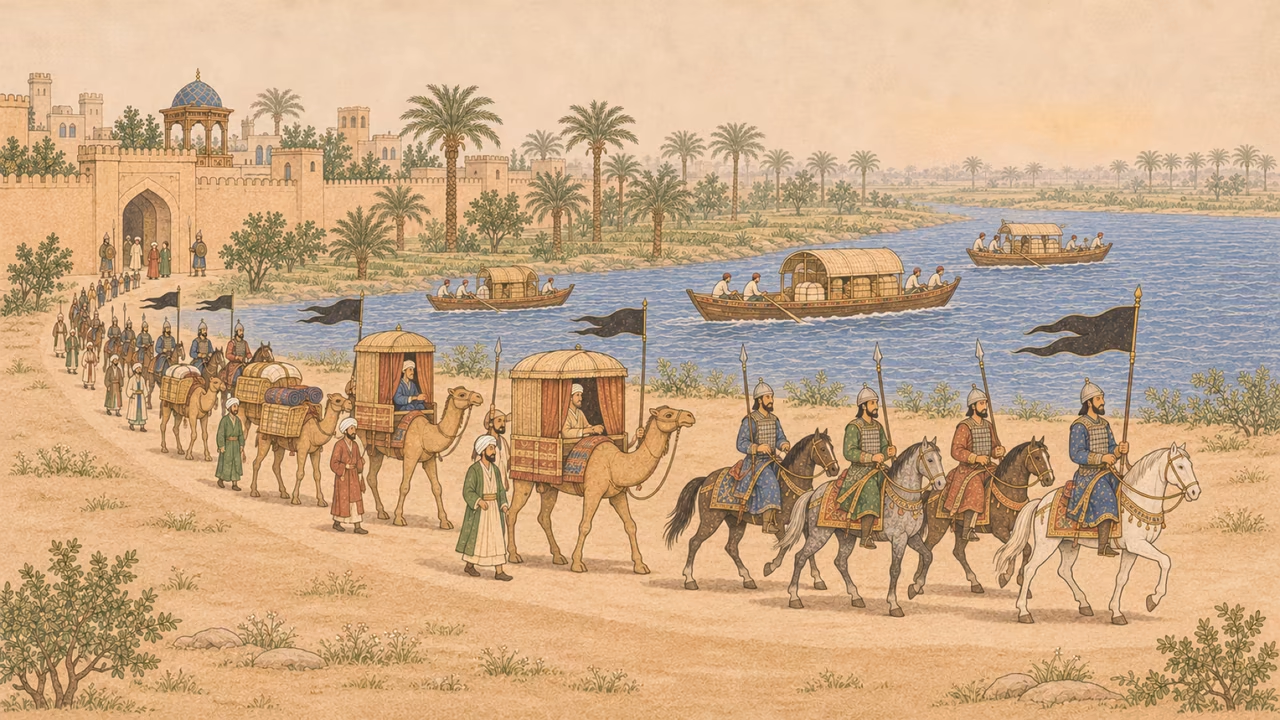
221 AH٢٢١ هـ
836
The caliph’s court moved about 130 km up the Tigris to a new city. Baghdad’s scholars and booksellers carried on.
Caliph · al-Mu’tasim
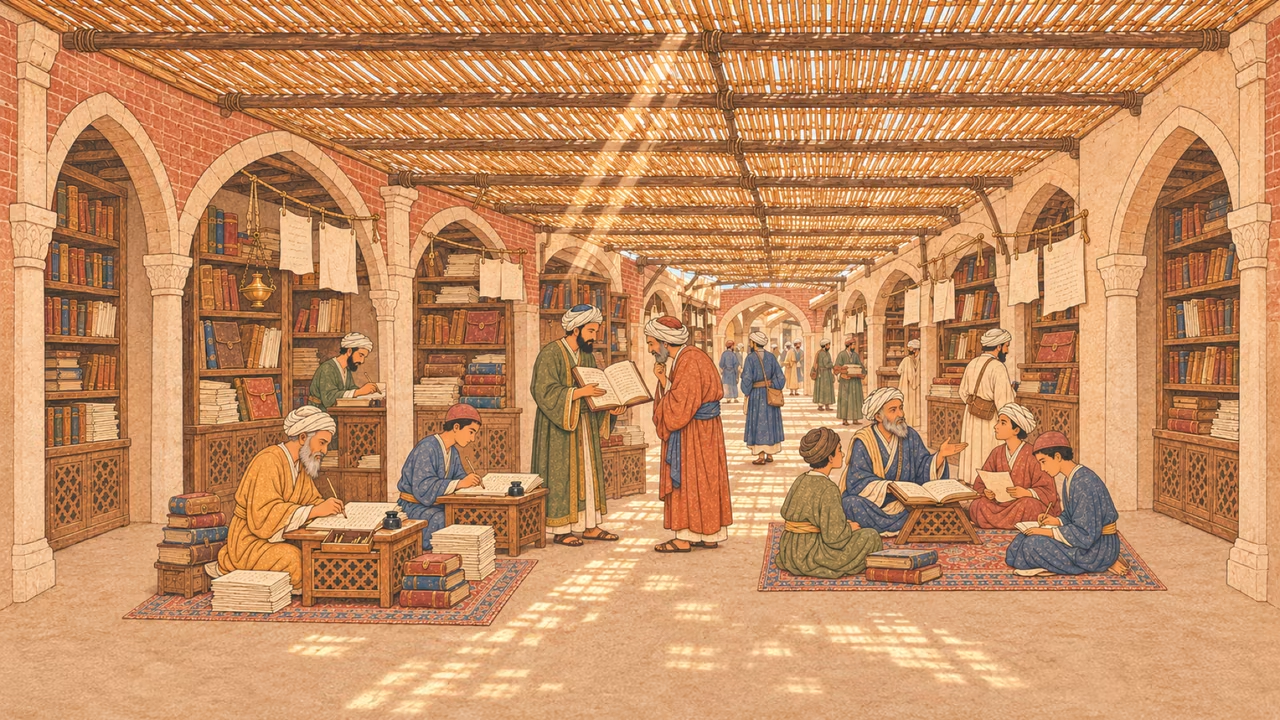
221–279 AH٢٢١–٢٧٩ هـ
836–892
With the court away, Baghdad’s teachers, physicians, copyists and booksellers kept its learning alive.
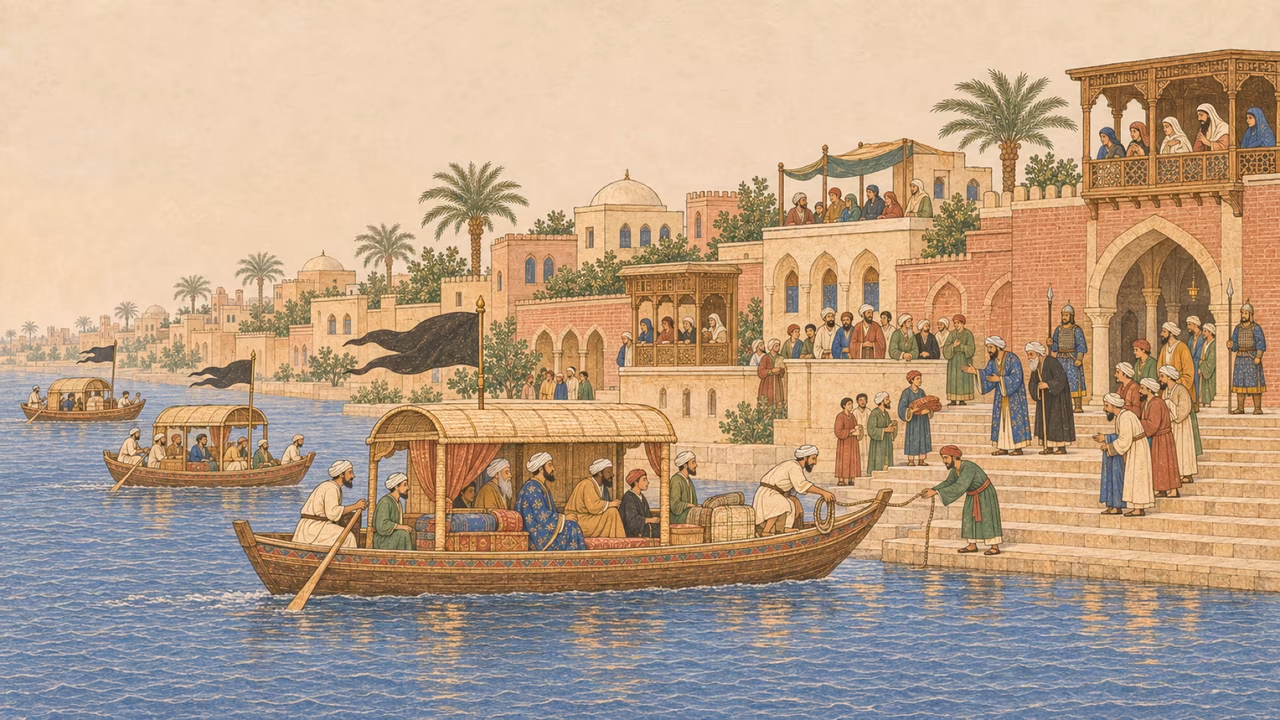
279 AH٢٧٩ هـ
892
After 56 years the court came home, to a city still arguing over its books.
Caliph · al-Mu’tamid
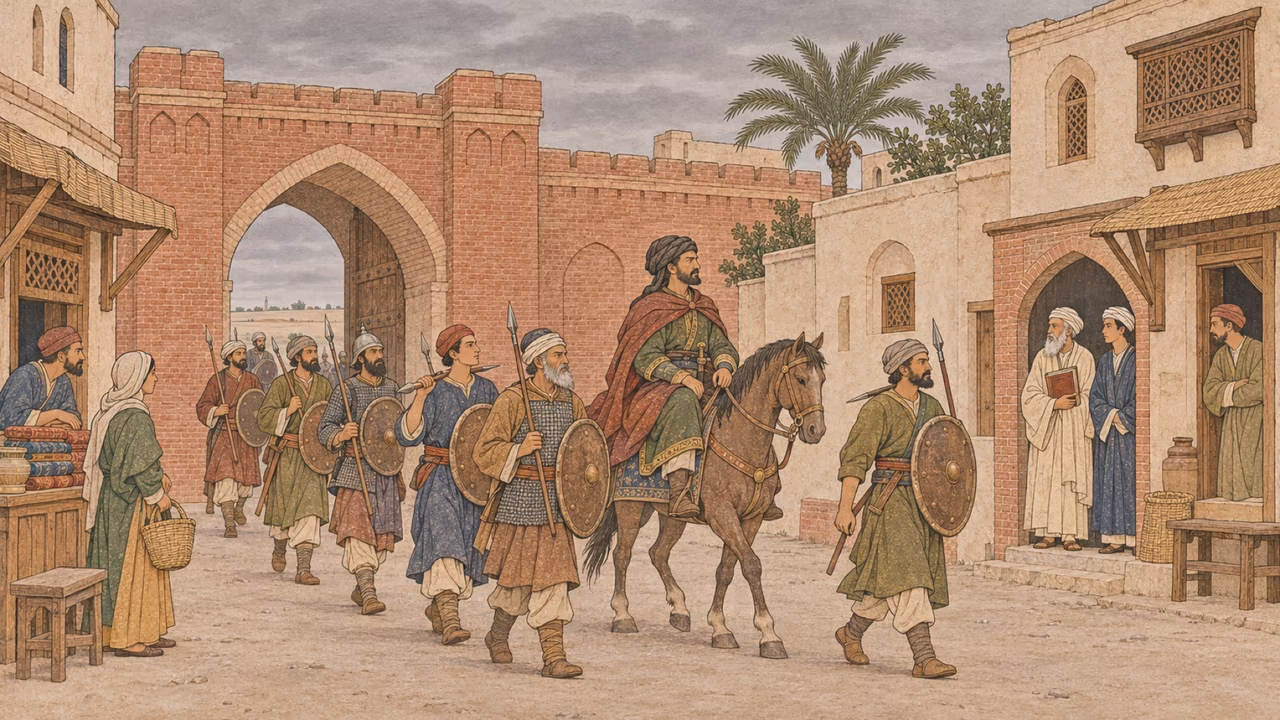
334 AH٣٣٤ هـ
945
The Buyid emirs took control of Baghdad. The caliphs stayed, and so did the scholars.
Caliph · al-Mustakfi
As power passed from one dynasty to another, Baghdad turned its learning into lasting institutions—and its books began journeys far beyond the city.
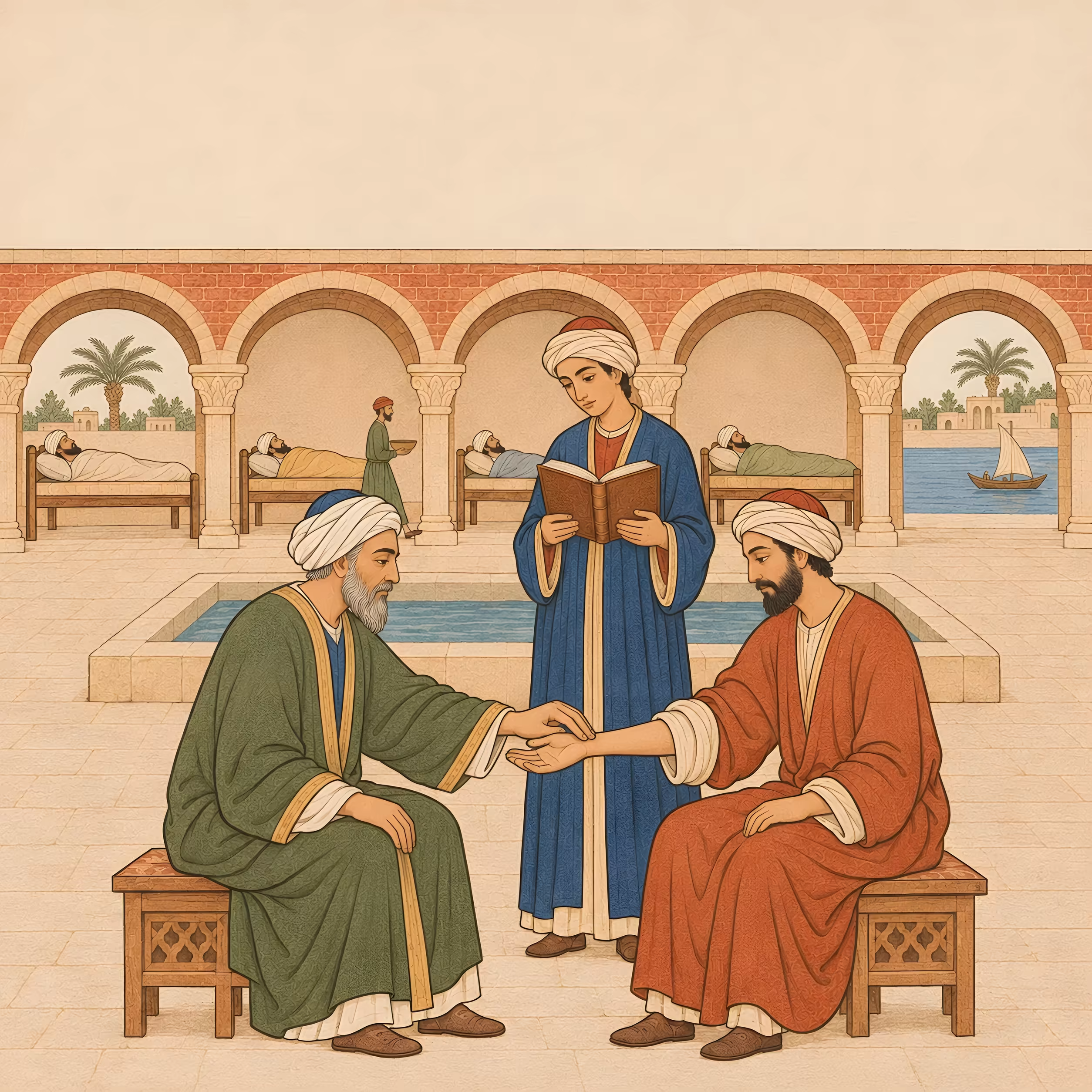
Period III
945–1258
 Part II · 833–945
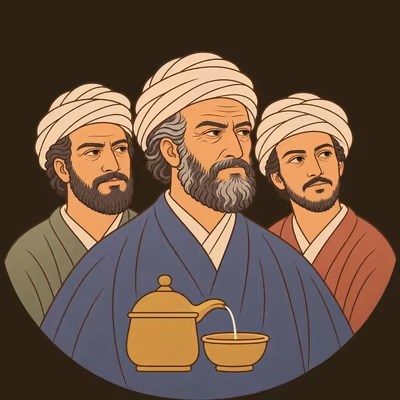
Baghdad’s learning was carried by people: translators who hunted down manuscripts, a philosopher who broke codes, engineers, and physicians who kept case notes. Here are five of them.
Hunted a lost Galen from Syria to Egypt. Found half.

Translation · Medicine
Part III · 833–945
By the mid-tenth century those translators, engineers and physicians were gone. Their books would be read for generations.
Part I · 982–1234

982
Buyid1234
Abbasid1067
Seljuk
BUYID EMIRS · 982
SELJUK SULTANS · 1067
ABBASID CALIPHS · 1234
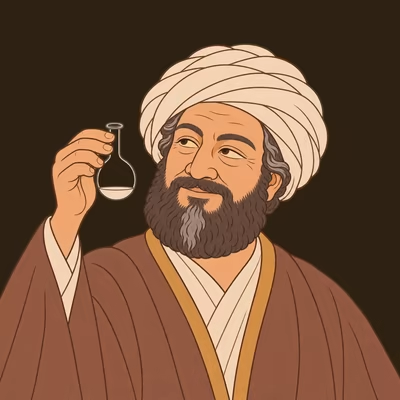
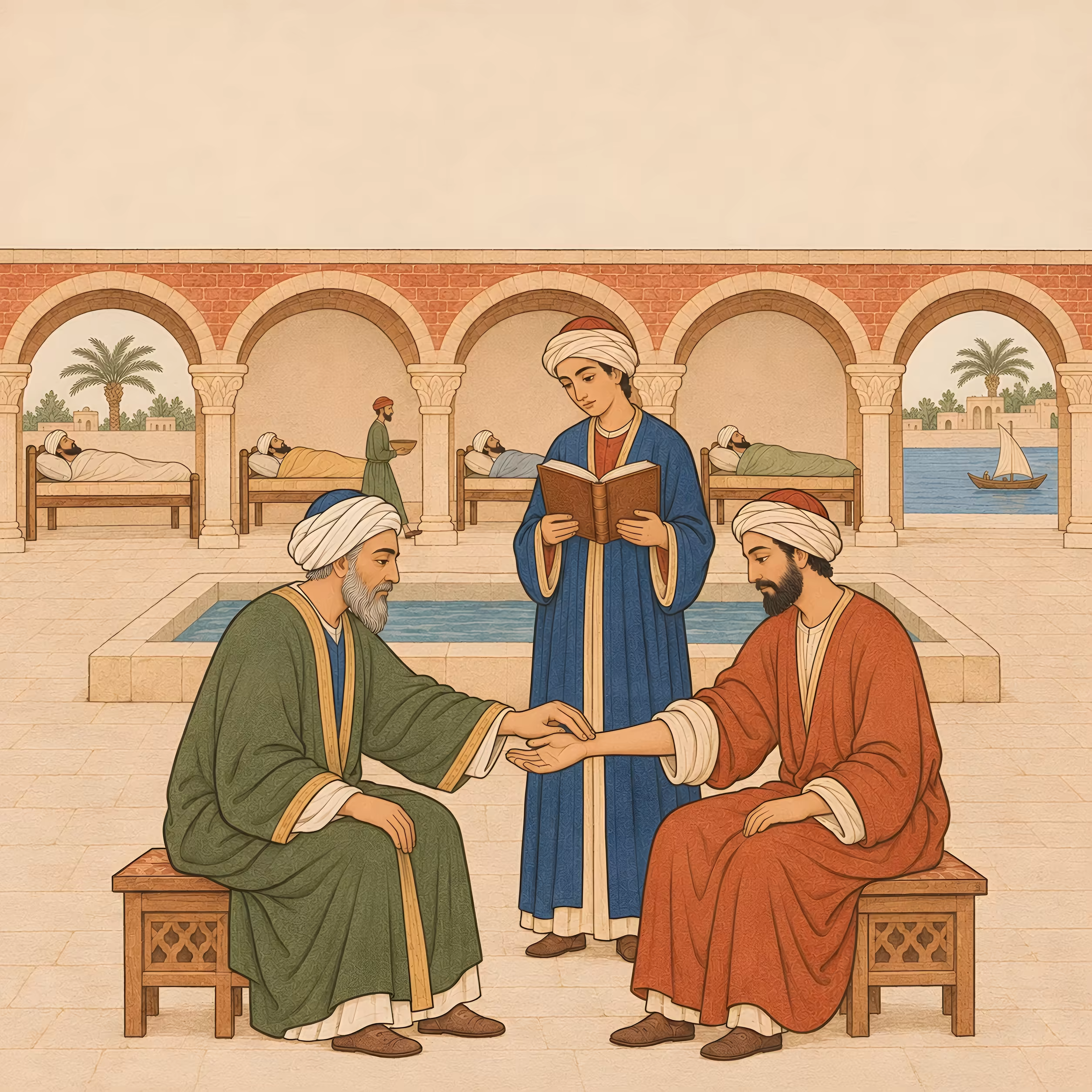
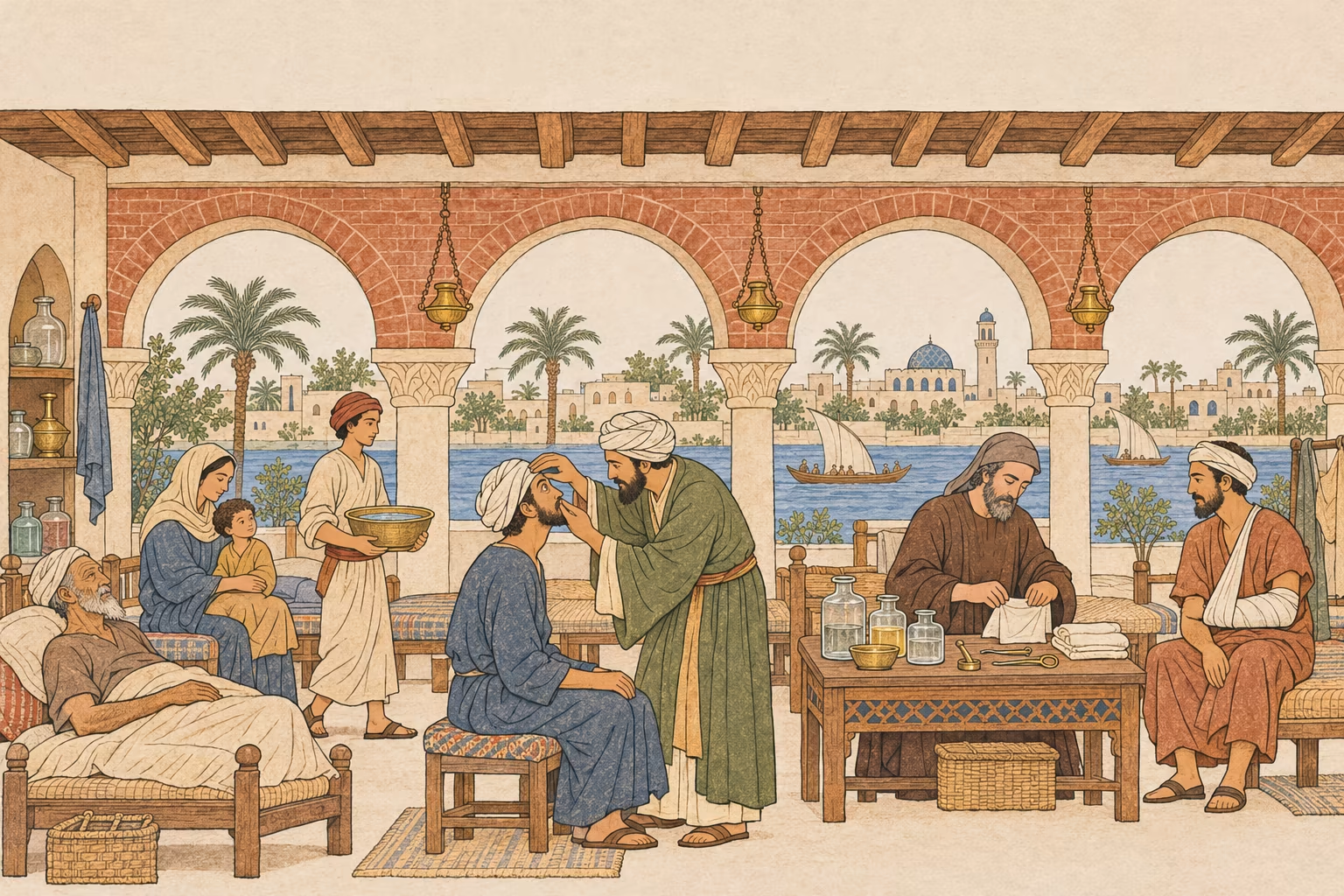
In 982 the Buyid ruler Adud al-Dawla opened al-Bimaristan al-Adudi on the Tigris. Two centuries later the traveller Ibn Jubayr found it still running, with doctors calling twice a week and food and medicine free.
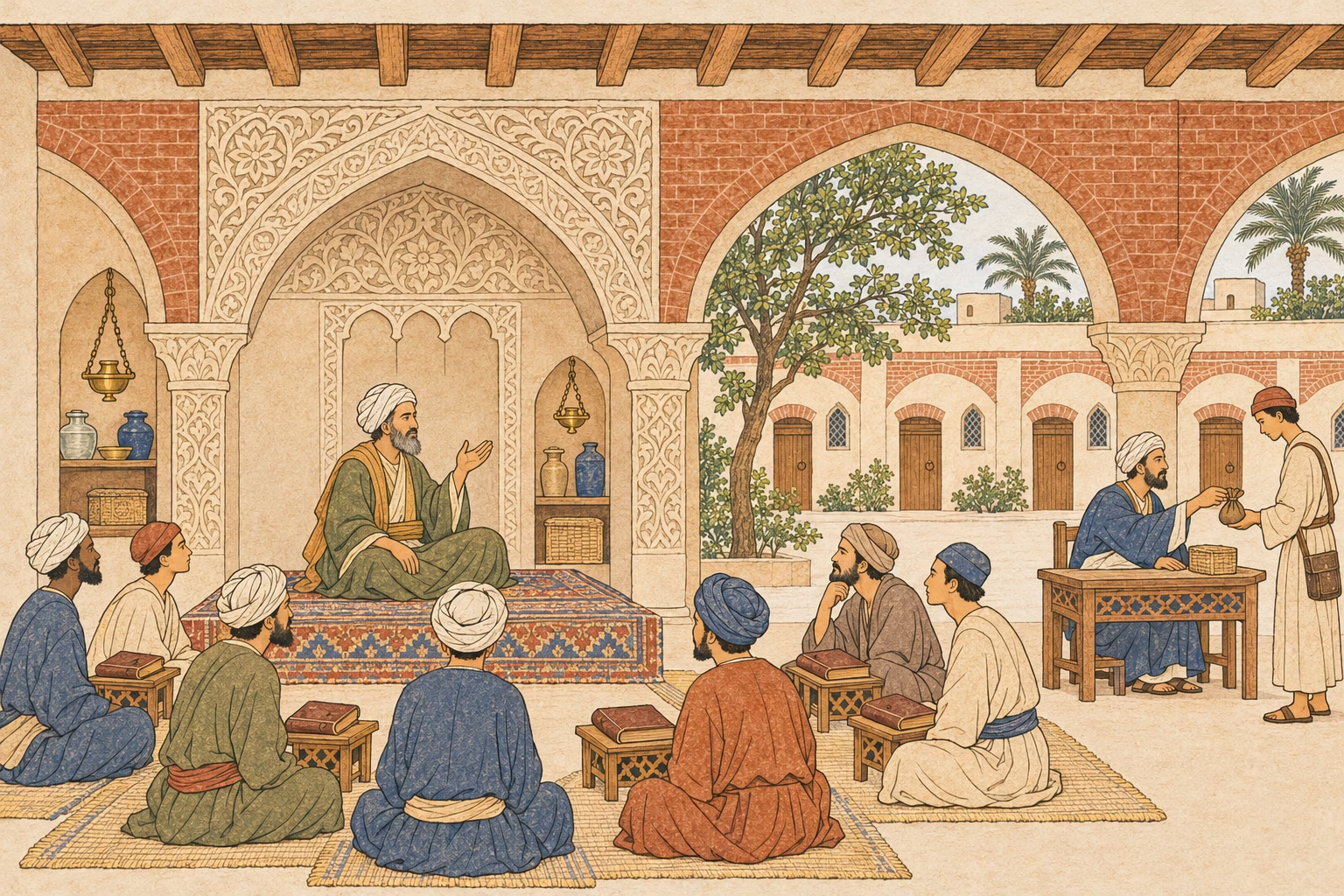
When power passed to the Seljuks, their vizier Nizam al-Mulk founded the Nizamiyya on a waqf: shops and land set aside for good, whose rents paid teachers, lodging and stipends long after he died. Al-Ghazali taught here.
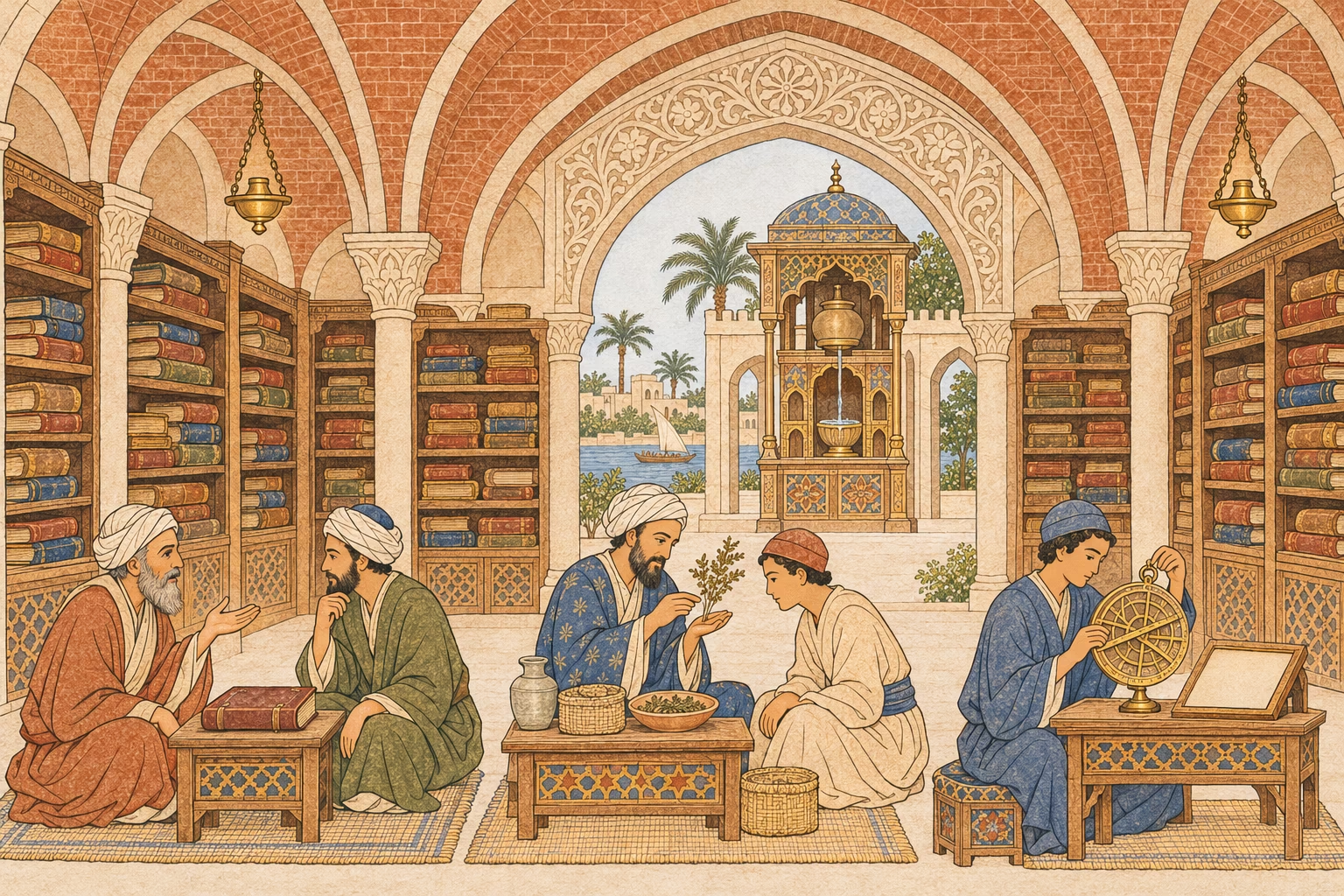
With the caliphs strong again, al-Mustansir opened the first college for all four Sunni schools of law, with Qur’an, hadith, medicine and mathematics beside a library and a water clock. Opened 252 years after the hospital, it still stands.
But how much did the city actually know?
Around 987, one bookseller set out to write it all down.
C. 987 · THE FIHRIST
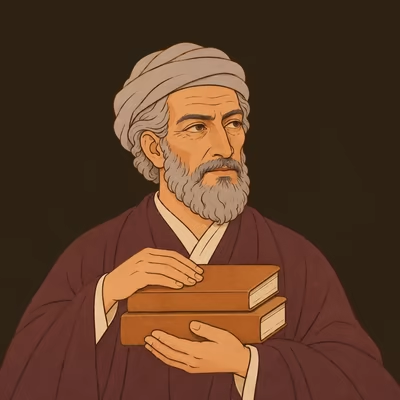
Ibn al-Nadim was the son of a Baghdad book dealer. Around 987 he set himself an enormous job: list the books of all peoples, Arab and foreign, that existed in Arabic, from grammar and poetry to medicine and the stars, and say who wrote them.
Part III · c. 830–1486
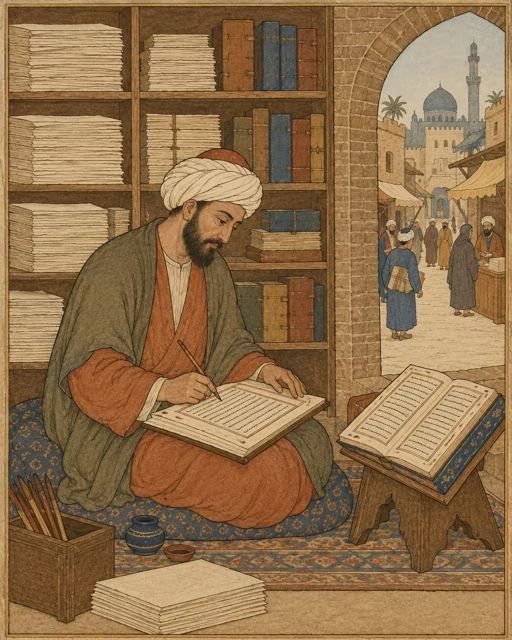
In Baghdad, al-Khwarizmi writes the book that gives algebra its name.
01 / 06
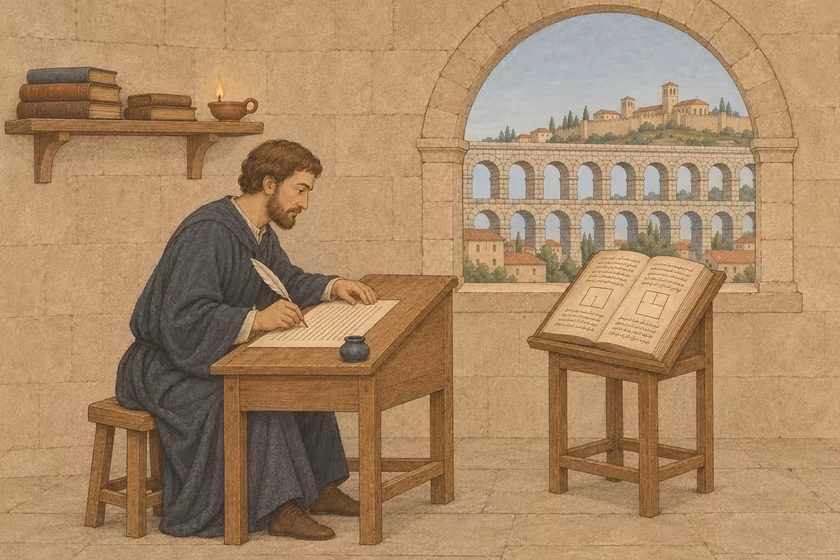
In Segovia, Robert of Chester turns it into Latin, more than three centuries after it was written.
02 / 06
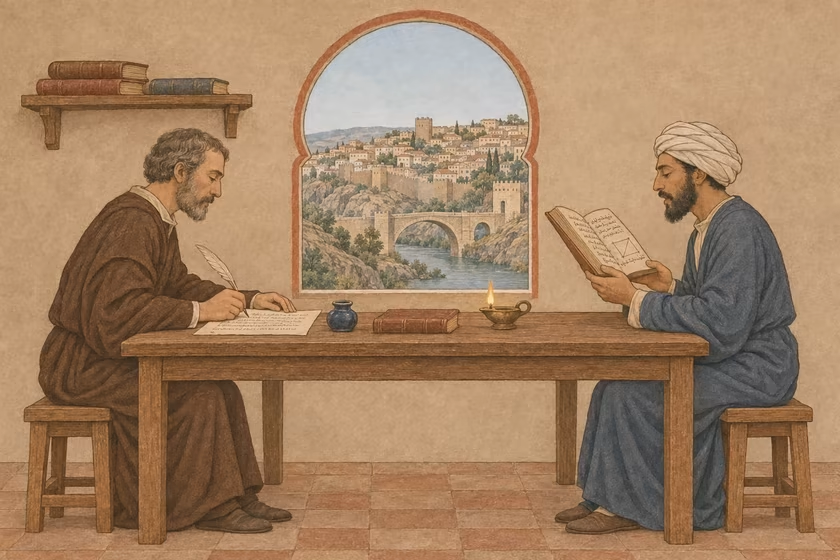
Gerard of Cremona, who came to Toledo for its Arabic books, translates it again.
03 / 06
After al-Razi dies, his students gather a hospital director’s lifetime of notes into one book.
04 / 06
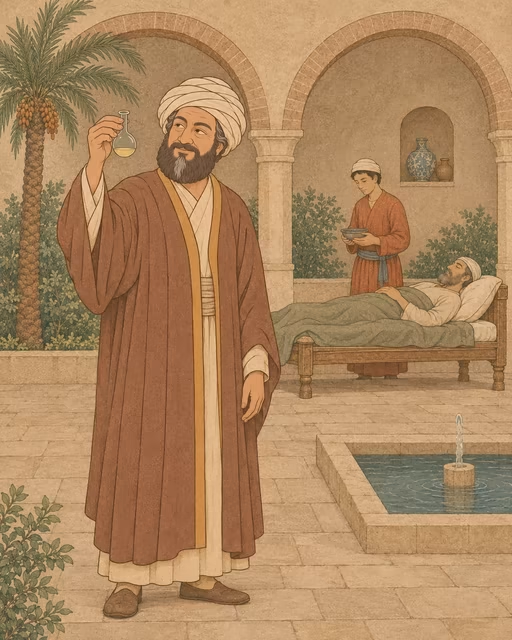
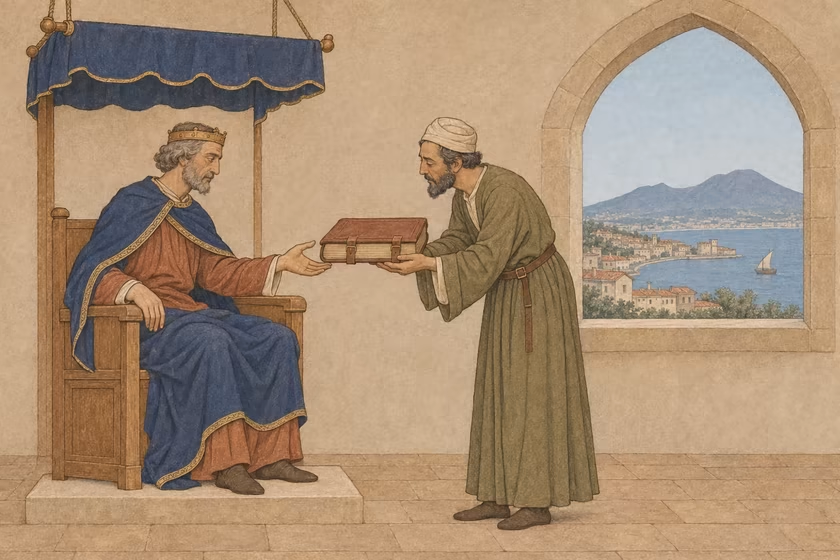
Faraj ben Salim turns it into Latin for Charles of Anjou, king of Naples.
05 / 06
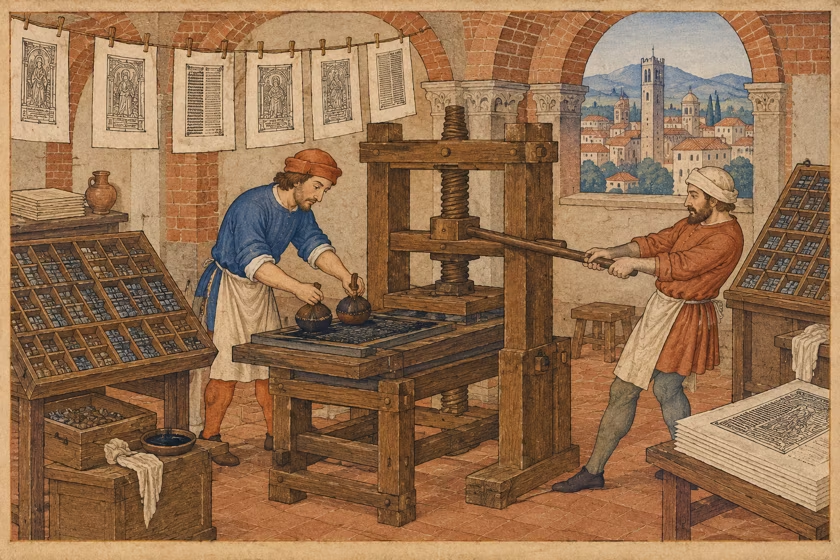
Printed in Brescia and reprinted until 1542, it is read by doctors for generations.
06 / 06
1258
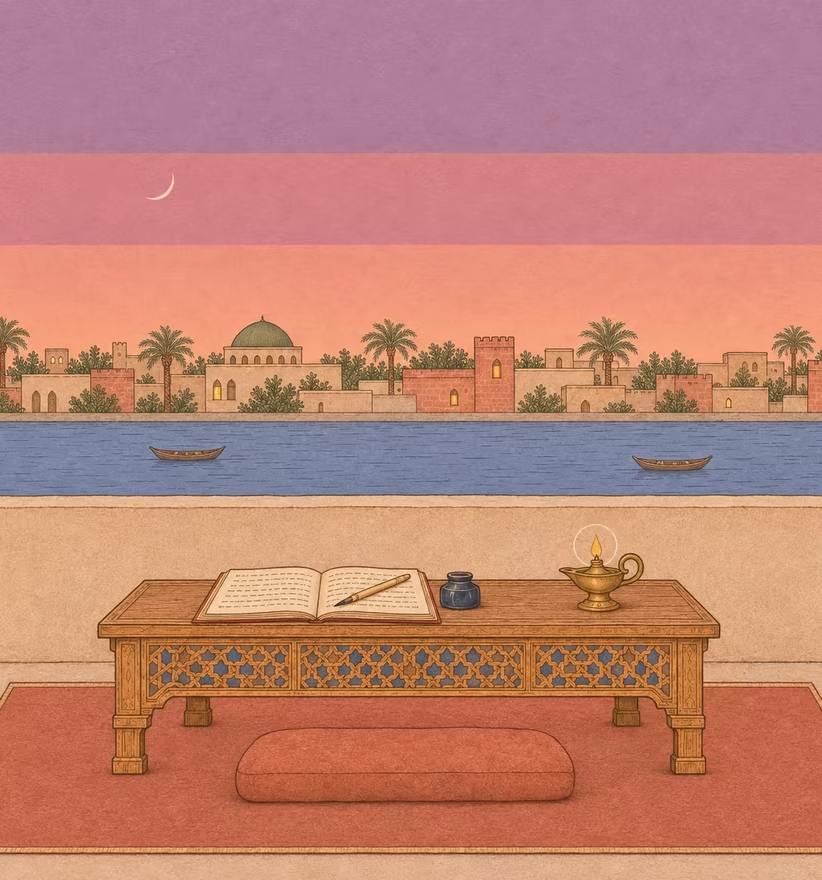
In 1258 the Mongols took Baghdad, and the age this story follows came to a close. But for five centuries the city had gathered knowledge from many lands, made it its own and added to it. By then its books were already being read in Latin, far from the Tigris.
Baghdad · 762–1258
Every time we solve an equation or run a program, we speak a little of Baghdad’s language.
Three words that left the House of Wisdom
Muḥammad ibn Mūsā al-Khwārizmī · Bayt al-Ḥikma, Baghdad, c. 820